When selecting a gearbox for a Steel Bar Cutting Machine, the choice between helical and spur gears represents a fundamental engineering trade-off that directly impacts performance, durability, and operational cost.
Spur Gears: The Economical Baseline
Spur gears feature straight teeth cut parallel to the gear’s axis. Their defining characteristic is that the entire tooth width engages instantly and simultaneously . This results in:
Advantages:
-
Lowest manufacturing cost among gear types
-
High efficiency (94-98%)
-
No axial thrust load—bearings only need to handle radial forces, simplifying design and reducing costs
-
Well-suited for low-speed, high-torque applications where budget is the primary constraint
Disadvantages for rebar cutting:
-
High noise levels due to abrupt tooth engagement and impact
-
Vibration transmission through the machine structure
-
Lower load capacity compared to helical designs under the same envelope
Helical Gears: The Industry Standard for Heavy-Duty Applications
Helical gears feature teeth cut at an angle to the gear axis, enabling gradual tooth engagement along the tooth length rather than instant contact .
Advantages:
-
Significantly quieter operation—gradual tooth entry reduces noise and vibration
-
Higher load capacity—multiple teeth remain in contact simultaneously, distributing stress across a longer contact line
-
Smoother, more reliable power transmission—the “relay race” effect of gradual engagement minimizes shock loading
-
Higher torque density—for equivalent output torque, helical gearboxes can be more compact
Disadvantages:
-
Generates axial thrust loads that require more robust (and costly) bearing systems such as angular contact ball bearings
-
Higher manufacturing cost
-
More complex lubrication requirements
Application in Rebar Cutting Equipment
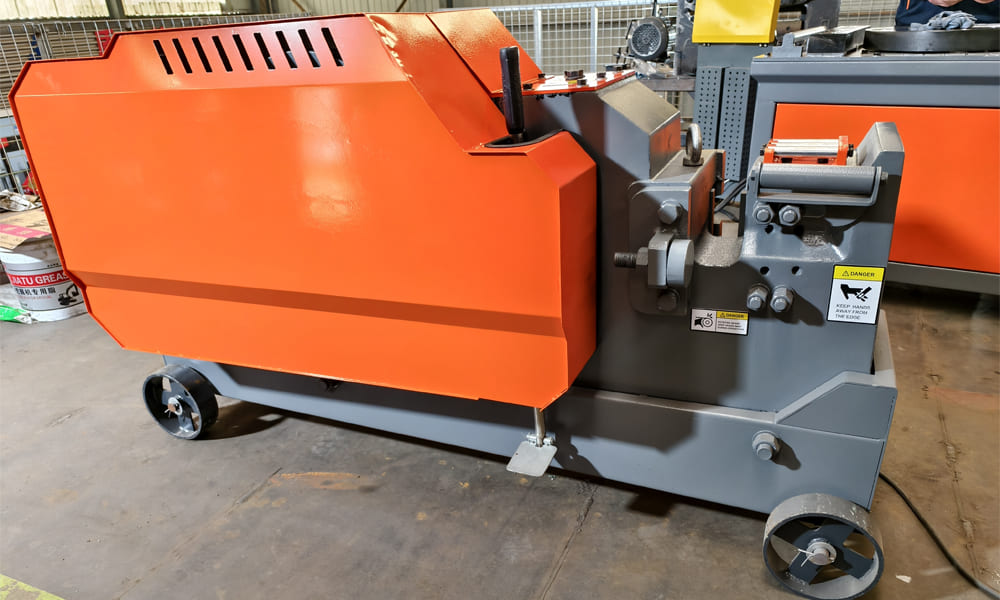
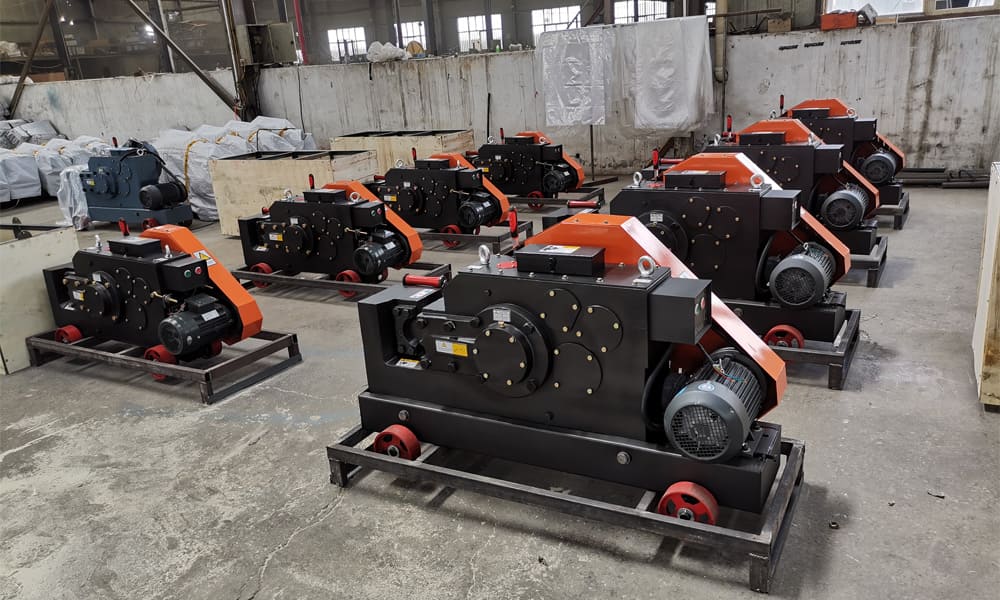
The harsh realities of construction environments—continuous operation, fluctuating loads, and the need for durability—make helical gearboxes the prevailing choice in professional rebar cutting equipment. Multiple rebar cutter product lines explicitly highlight their use of “helical laminated gearboxes” as a key feature for noise reduction and durability .
Selection Decision Framework:
| Priority | Recommended Gear Type | Rationale |
|---|---|---|
| Lowest initial cost, low-speed operation, noise not a concern | Spur | Economy and simplicity outweigh noise penalty |
| Continuous duty, operator comfort, long-term reliability | Helical | Noise reduction and load capacity justify higher cost |
| High-volume professional use, demanding environments | Helical | Superior durability and smooth operation under stress |
Critical Design Consideration: Axial Thrust
The primary engineering challenge with helical gears in rebar cutters is managing axial thrust. The angled teeth create forces that push the gears along the shaft axis . The gearbox housing and bearings must be designed to handle these loads—a factor that explains the use of robust “laminated” gearbox constructions in heavy-duty models . Spur gears avoid this complexity entirely, as forces act only normal to the gear axis .
Bottom Line
For professional-grade rebar cutters operating in demanding construction environments, helical gearing is the established standard, delivering the quiet operation, load capacity, and smooth power transmission required for continuous, reliable service . Spur gearing remains a viable option only for cost-sensitive applications where low speeds make the noise and vibration trade-offs acceptable.