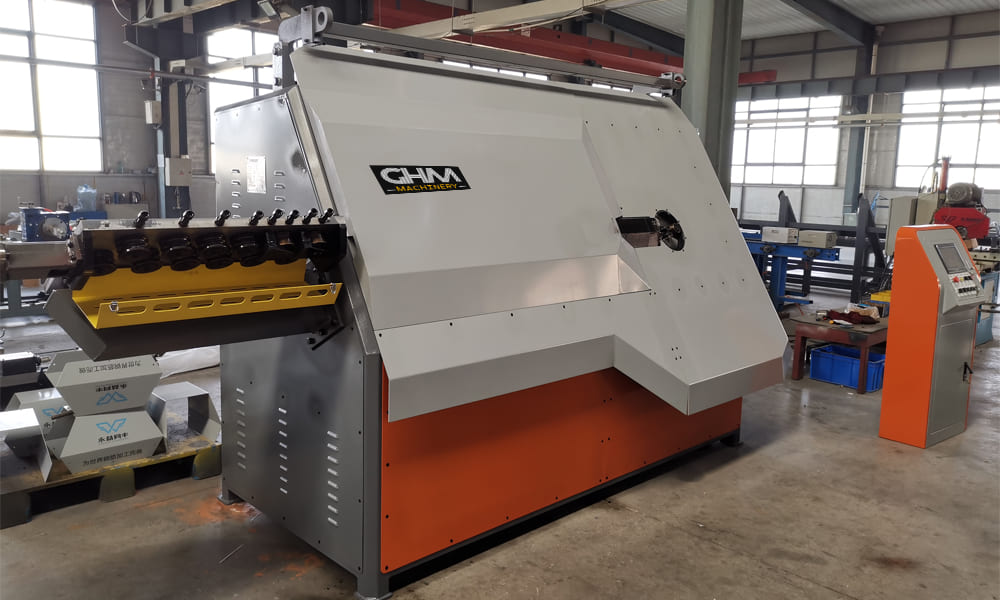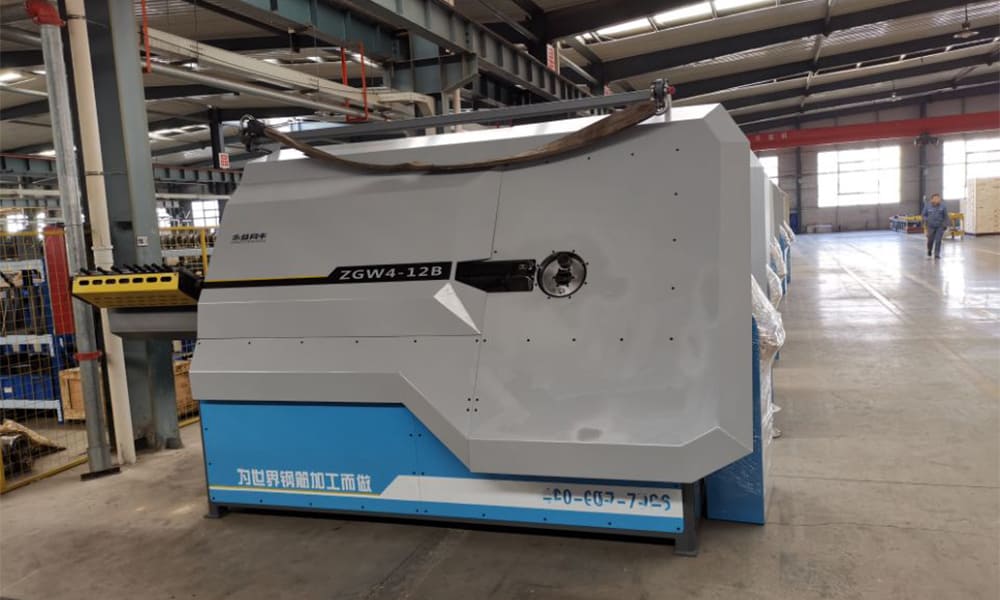
In modern construction, reinforcing bars (rebar) are essential for providing tensile strength to concrete structures. However, bending rebar to precise angles and shapes has traditionally been a labor-intensive, time-consuming task. The advent of the automatic rebar bender has transformed this process, offering unparalleled advantages in terms of efficiency, labor reduction, and versatility.
Advantages of Automatic Rebar Benders
The primary advantage of an automatic rebar bender is its high level of precision. Equipped with digital controls and programmable logic controllers (PLCs), these machines can produce consistent bends with minimal deviation—typically within ±0.5 degrees. This eliminates human error and ensures that every bent bar meets engineering specifications. Moreover, automatic benders are capable of handling multiple diameters and complex shapes (e.g., stirrups, spirals, and U-bends) without manual adjustments. They also feature high-speed operation, with some models bending up to 60 bends per minute, drastically reducing cycle times.
Versatile Uses Across Construction Projects
Automatic rebar benders are used in a wide range of applications, from small residential foundations to large-scale infrastructure projects. Common uses include:
-
Beams and columns: Producing L-shaped, U-shaped, or three-dimensional stirrups.
-
Slabs and footings: Creating straight or hooked bars for reinforcement grids.
-
Prefabrication workshops: Batching precise rebar cages for bridge girders, tunnel linings, and high-rise buildings.
-
Industrial floors and roadworks: Bending heavy-diameter bars (up to 50 mm) for heavy-load structures.
Their ability to switch between different bend angles and lengths on the fly makes them indispensable for just-in-time production on construction sites or in rebar processing yards.
Significant Labor Savings
Manual rebar bending requires skilled workers using hand tools or manual benders, which is physically demanding and slow. One machine operator can oversee an automatic bender while the machine does the heavy lifting. Typically, a single automatic unit replaces 5–10 manual laborers, reducing payroll costs and workplace injuries (such as back strain and hand injuries from lever-operated benders). Furthermore, because the machine follows pre-programmed orders, no time is lost in measuring, marking, or reworking incorrect bends. This allows skilled workers to be redeployed to more value-added tasks like tying rebar or setting formwork.
Boosted Efficiency and Productivity
Efficiency gains from automatic rebar benders are measurable. Manual bending might produce 100–200 pieces per hour depending on complexity, whereas an automatic machine can produce 800–1,500 pieces per hour. Combined with automated feeding systems, the machine can process an entire batch from a stock length without stopping. Digital integration with design software (e.g., CAD or BIM) further streamlines workflow: rebar schedules are directly imported, and the machine optimizes cutting patterns to minimize waste (saving up to 5–10% of steel material). This not only accelerates project timelines but also reduces material costs and environmental impact.
Conclusion
The automatic rebar bender is a game-changer for the construction industry. By combining precision, versatility, massive labor savings, and unmatched efficiency, it addresses the core challenges of traditional rebar processing. As infrastructure demands grow and labor shortages persist, adopting these machines will become not just an advantage but a necessity for competitive and sustainable construction practices.